Differentiating among State, Public, and Private Educational Institutions: An Overview
Private schools in the UK, often referred to as independent schools, stand out from state schools in several ways. While state schools are publicly funded and free for students, private schools charge significant tuition fees, averaging around £13,600 to over £15,000 annually for day pupils [1][3][5].
One of the key differences lies in the academic environment. Class sizes in private schools tend to be smaller, allowing for more individual support and resources for students [3]. This, coupled with a higher budget and donations, enables private schools to offer a broader and better-funded range of extracurricular activities, such as arts, sports, and drama, which have been cut back in many state schools recently [1][3].
The academic performance of private school students is often superior. A higher proportion of private school students achieve first or upper second class degrees at university compared to their state school peers, reflecting the higher academic standards and preparation in private schools [5]. Admission to private schools is selective, involving assessments and interviews, unlike state schools that commonly allocate places based on catchment areas [1].
Regarding extracurricular activities, private schools offer a variety that goes beyond what is typically available in state schools. Secondary school students in private schools are required to take the same national tests, such as GCSEs and A Levels [6].
Private schools are self-funded and are not required to follow the national curriculum, although they are inspected by relevant governing bodies, such as the Independent Schools Inspectorate (ISI) [2]. The term 'public school' in the UK refers specifically to prestigious private schools, such as Eton and Harrow [4].
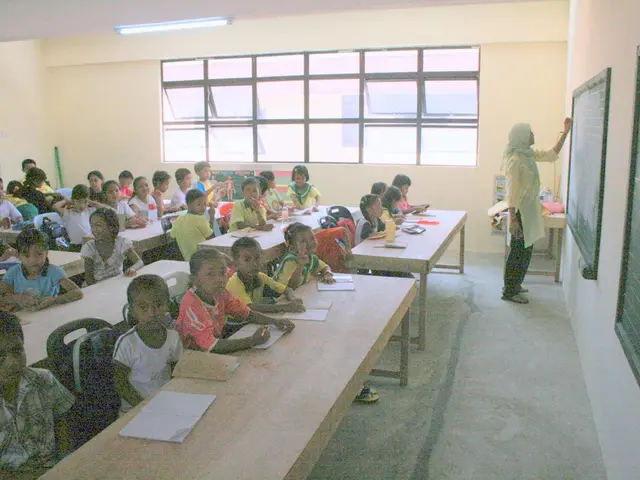
State schools, on the other hand, tend to have high social and cultural diversity, and all children aged 5 to 18 in the UK are entitled to a place at a state school, which does not charge fees [7].
When choosing a school for a child, factors such as the child's personality, the family's budget for fees, and the school's reputation can play a significant role [8]. For instance, if considering a private school like St Peter's Prep, located in Devon, England, more information can be obtained by getting in touch or visiting during open days [9].
In summary, UK private schools offer smaller classes, higher academic standards, more extracurricular opportunities, and stronger pathways to top-tier higher education institutions, while state schools are publicly funded, have larger classes, fewer resources, and face challenges in maintaining extracurricular provision and competitive university entry rates [1][3][5].
- St Peter's Prep, a private school in Devon, England, invites prospects to learn more about its unique educational and lifestyle offerings during open days.
- If you're looking for scholarships to aid in the high tuition fees of private schools, you might want to explore education-and-self-development resources or directly contact the schools of interest.
- While state schools provide a diverse and inclusive learning environment for all students at no cost, home-and-garden refresher courses may not be amongst their offerings, unlike some private schools that cater to a holistic lifestyle development.