
Economic Study of Faith's Impact on Financial Decisions
Religious institutions play a significant role in shaping not only individual economic behavior but also broader societal practices and legislation. This influence is evident in various religious ethical frameworks, such as 'Zakat' in Islam and 'Dharma' in Hinduism, which promote economic equity and wealth distribution.
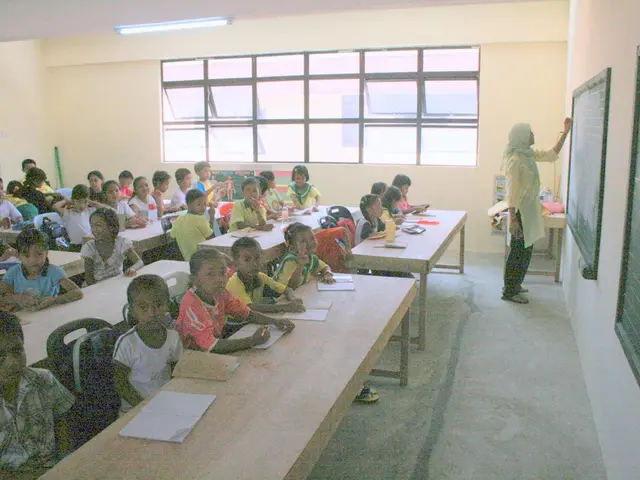
Large religious institutions, like churches, run schools, hospitals, and charitable organizations, creating employment opportunities and stimulating economic activities. They also manage donations, almsgiving, and endowment funds, influencing how followers approach their finances.
Religious institutions own substantial assets and manage large infrastructures, contributing significantly to local and national economies through various endeavors. Their financial clout rivals that of large corporations, providing them with considerable bargaining power in local economies.
In an era of globalization, religious institutions impact economic behavior on an international scale. For example, Islamic banking principles like profit-and-loss sharing have gained traction beyond Muslim-majority countries, influencing global financial markets. Religious networks facilitate international trade, migration, and collaboration, supporting business ventures and cultural exchanges that foster economic growth.
Religious ethics significantly impact economic behavior, shaping how adherents view and engage in economic activities. For instance, Christianity's moral exhortations and Islam's prohibition of riba (interest) are examples of religious ethical teachings that influence economic behavior.
Religious ethics provide moral frameworks that guide economic decisions. For example, the Protestant work ethic promotes values like hard work, thrift, and discipline, which have historically supported capitalist development and increased savings and investment. Religious beliefs also shape collective action and social cohesion by fostering shared values that reduce transaction costs and encourage cooperation within communities.
Social networks facilitate the flow of information, trust, and resources, affecting economic exchanges and cultural transmission between societies. A country’s social openness and cultural foundations influence economic behavior through the strength and structure of these networks, enabling or constraining cultural and economic exchanges.
Economic policies create the formal incentives and constraints within which individuals and groups operate. Policies can enhance or undermine institutional strength, affecting economic performance by shaping property rights, regulatory environments, and welfare provisions. Strong institutions provide the legal infrastructure and stable governance necessary for predictable economic interactions and reduced uncertainty.
Institutional strength, encompassing legal systems, governance quality, and enforcement mechanisms, supports economic behavior by fostering trust, enforcing contracts, and protecting rights. Across historical periods, societies with robust institutions tend to experience higher economic growth and more efficient markets, as institutions mitigate opportunistic behaviors and promote long-term planning.
Together, these factors form a complex system where religious ethics contribute to value formation, social networks mediate cooperation, economic policies set formal incentives, and strong institutions ensure rule of law—each shaping economic behavior across different cultures and times. Understanding this interplay is crucial in appreciating the complexity of economic interactions in a world where faith and commerce are inextricably linked.
- The influence of religious ethics extends beyond individual economic behavior, shaping economic policies that provide the formal incentives and constraints within which business and finance operate.
- In the realm of finance, religious ethical frameworks such as Islamic banking principles promote practices like profit-and-loss sharing, influencing global financial markets.
- The role of religious institutions in education-and-self-development is evident through their operation of schools, fostering knowledge and skills that contribute to a nation's workforce and economic health.
- The connection between science and religion is also tangible, as technological advancements in health-and-wellness and fitness-and-exercise are shaped by religious beliefs and values that prioritize well-being and responsible stewardship of the body.
- Economic growth is further stimulated by religious institutions' engagement in investing and business, as their involvement in charitable organizations and local ventures generates employment opportunities and economic activity.