
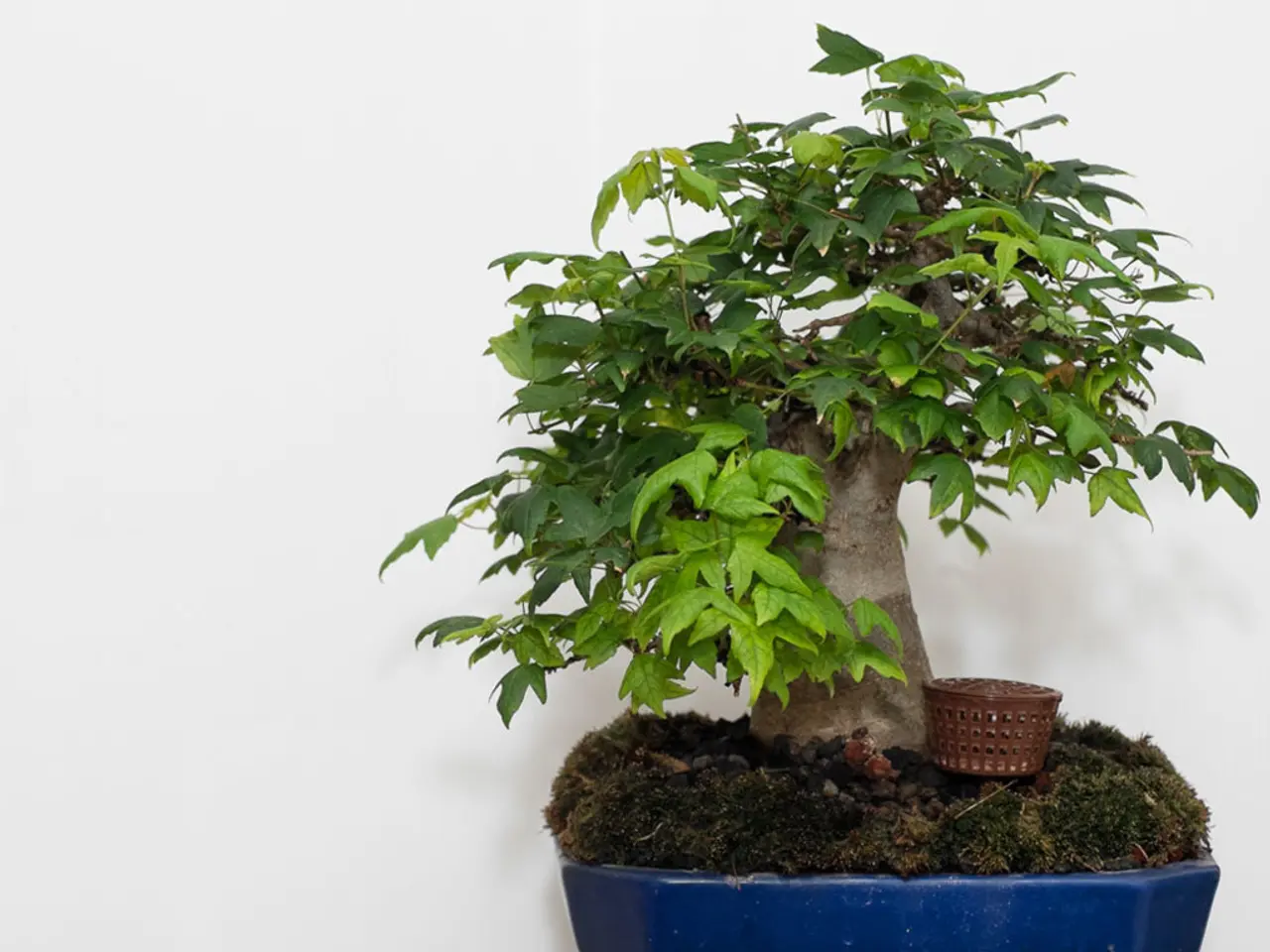
Intricate Bonsai Wiring Techniques: Manipulating Branches and Shape Adjustment
In the world of bonsai, advanced wiring techniques have emerged as a powerful tool for creating complex shapes and organic forms that mimic the style of mature trees. By understanding and mastering these techniques, bonsai enthusiasts can craft beautiful, intricate designs that reflect nature's beauty in miniature form.
At the heart of advanced wiring lies the ability to manipulate the growth of bonsai trees using wires. These tools can generate various spiral movements, from tight, corkscrew-like spirals to loose, flowing spirals, or even tight, concentric spirals. The choice of wire – copper, for instance, is preferred for its increased durability and resistance to corrosion – plays a crucial role in the outcome of the wiring process.
One of the fundamental techniques in advanced wiring is single and double wiring. Single wiring involves using one wire per branch for precise control over individual branches, allowing for subtle adjustments in shape and direction. Double wiring, on the other hand, employs one wire around two or more branches to provide stability and create a uniform shape, particularly useful for creating layered branch pads and refining the overall structure of the bonsai.
Another essential aspect of advanced wiring is gradual bending. To avoid breakage, branches should be bent gently over time, allowing the tree to adapt to the new shape without sustaining damage. Specialised tools, such as concave cutters, are used to make structural bends safely and efficiently, minimizing the risk of branch splitting.
The use of raffia is another valuable technique in advanced wiring. Wrapping raffia around the branch before wiring helps protect the bark from wire marks and damage, especially when bending thick branches.
Once the branches have taken the desired shape, it is essential to remove the wires to prevent them from digging into the bark, which could lead to long-term damage.
Advanced wiring techniques offer numerous benefits, including the ability to create complex shapes, organic forms, and maintain structural balance in bonsai trees. By mastering these skills, bonsai enthusiasts can elevate their craft beyond the basics, evoking a sense of wonder and awe in their creations.
Every angle and bend in bonsai design is an opportunity to convey emotion and narrative, symbolizing patience and dedication as the twisted limbs of bonsai trees serve as a reminder that true mastery lies in harmonious synchrony between human intention and organic beauty. As you work with wires, imagine the forces of nature shaping the tree's growth over time, and let your creativity flourish as you sculpt the perfect bonsai.
While mastering advanced wiring techniques in bonsai, enthusiasts can explore different lifestyle realms such as fashion-and-beauty and home-and-garden, where these intricate design skills might find surprising application. For instance, the precision and control revealed in a well-crafted bonsai could translate to innovative clothing designs or unique home decor pieces. Furthermore, the technology sector might benefit from these wiring techniques, as the adjustments in shape and direction mirrors the development of ideas in a technological landscape, leading to education-and-self-development opportunities in design, engineering, and beyond.